
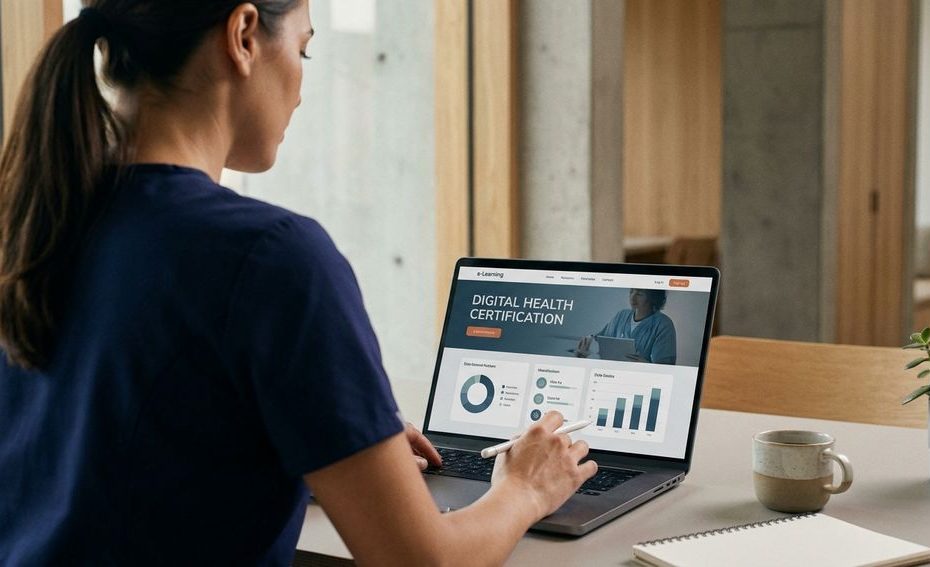
Digital health careers start where healthcare problems meet technology skills: pick the path closest to your current background, learn the bridge skills employers use every day, and build proof through small practical projects. You don’t need to learn everything at once, and you don’t need to be a clinician to begin.
Most people exploring digital health careers feel stuck between two worlds. A nurse may understand clinical workflows but freeze when someone mentions Structured Query Language (SQL), and a software developer may build clean applications but not know how Electronic Health Records (EHRs), Health Insurance Portability and Accountability Act (HIPAA) privacy rules, or Fast Healthcare Interoperability Resources (FHIR) fit into care delivery. This guide helps you choose where to start, what to learn first, and how to turn your current skills into a credible digital health career path.
What Are Digital Health Careers, And Why Are They Growing?
Digital health careers include roles that use software, data, connected devices, analytics, and workflow design to improve healthcare delivery. You’ll see these roles in hospitals, health systems, health technology companies, insurance organizations, public health agencies, research teams, and vendors that support clinical operations.
The field is growing because healthcare now runs on digital systems. EHRs, telehealth platforms, remote patient monitoring tools, patient portals, clinical dashboards, and care coordination software all need people who can connect technology decisions to real patient, clinician, and operational needs. The Office of the National Coordinator for Health Information Technology (ONC) continues to track broad adoption of EHRs, which means healthcare organizations need people who understand digital records, data exchange, training, support, and workflow improvement.
Career demand also connects to larger labor trends. The U.S. Bureau of Labor Statistics (BLS) projects faster-than-average growth for several related roles, including health information technologists and medical registrars, medical and health services managers, software developers, quality assurance analysts, testers, and data scientists. That doesn’t mean every digital health job is easy to get. It means the skills behind these jobs are useful across many parts of healthcare.
How Do You Get Into Digital Health With No Clinical Background?
You can enter digital health without a clinical background by learning healthcare operations, health data basics, privacy rules, and how digital tools fit into patient care. Your best starting point is usually support, analytics, implementation, project coordination, product operations, or customer success in a healthcare setting.
If you come from technology, data, operations, marketing, education, or customer support, don’t assume you’re starting from zero. Healthcare organizations need people who can document workflows, train users, analyze system problems, manage tickets, explain product behavior, and communicate across teams. The missing piece is usually healthcare fluency, not talent.
Start by learning how care moves through a system. Understand patient registration, scheduling, clinical documentation, orders, billing handoffs, referrals, prior authorization, care gaps, discharge planning, and follow-up. You don’t need to master every area, but you should understand why a small software change can affect nurses, physicians, pharmacists, coders, billing teams, and patients at the same time.
Then learn the vocabulary employers use. Search job boards for terms like Health Information Technology (Health IT), health informatics, clinical systems analyst, EHR analyst, implementation specialist, health data analyst, interoperability analyst, telehealth coordinator, and healthcare product associate. Many digital health jobs don’t say “digital health” in the title, so your search terms matter.
Do Clinicians Have An Advantage In Digital Health Careers?
Clinicians often have a strong advantage because they understand care delivery, workflow pressure, patient safety concerns, and the way tools succeed or fail in real use. The skills to add are data literacy, systems thinking, product communication, and basic technical vocabulary.
If you’re a nurse, pharmacist, physician, therapist, laboratory professional, or other clinician, your clinical judgment is valuable. You already know how documentation burden feels, why alert fatigue frustrates users, and how a confusing order set can slow care. Many technologists need years to understand those operational details.
Your first step is to translate clinical experience into digital work. Instead of saying you “used the EHR,” describe the workflows you supported: medication reconciliation, discharge documentation, triage, care coordination, patient education, quality reporting, or clinical escalation. Employers want to see that you can identify workflow gaps, train peers, test system changes, and explain clinical requirements to technical teams.
Useful early targets include clinical informatics analyst, EHR trainer, clinical systems analyst, implementation specialist, quality improvement analyst, patient safety analyst, telehealth operations specialist, and product specialist for a health technology company. You don’t need to become a software engineer unless that’s your goal. Many clinician-to-digital-health moves succeed because the clinician becomes the bridge between end users and technical teams.
Do You Need To Know How To Code For Digital Health Careers?
You don’t need coding for every digital health role, but you do need enough technical literacy to work confidently with data, systems, and product teams. Coding becomes more useful if you want analytics, interoperability, software, automation, or Artificial Intelligence (AI)-related roles.
For non-technical roles, start with the tools that appear in daily work. Learn spreadsheet analysis, data cleaning, dashboards, ticketing systems, user acceptance testing, workflow diagrams, and clear requirements writing. If you can explain what users need, test whether a system works, and document defects without confusion, you’ll be useful in many digital health teams.
For analytics roles, SQL is often a better first technical skill than full software development. SQL helps you query structured data, check counts, find trends, and answer operational questions. Add Excel, a dashboard tool, and basic statistics, then build small projects using public health or synthetic healthcare datasets when real patient data is not available.
For technical roles, learn application programming interface (API) basics, FHIR, Health Level Seven (HL7), data privacy, authentication concepts, and software testing. You don’t need to memorize every standard at the start. You need to understand why health data exchange is harder than moving ordinary app data, and why patient identity, consent, clinical meaning, audit trails, and safety checks matter.
What Entry-Level Digital Health Jobs Should You Target First?
Good early digital health roles include EHR support analyst, implementation coordinator, health data analyst, clinical systems trainer, product support specialist, telehealth coordinator, interoperability support analyst, and health IT project coordinator. Choose roles that match your current strengths, then learn the missing bridge skills for that path.
If you’re clinical, look for roles close to care delivery. EHR trainer, clinical informatics associate, quality analyst, patient safety systems analyst, clinical application support, and implementation roles let you use workflow knowledge immediately. Your value is that you can speak with clinicians and spot operational risk that a purely technical candidate may miss.
If you’re technical, look for healthcare software, data, testing, security, product, or integration roles. Health technology companies need developers, quality assurance analysts, data analysts, product analysts, implementation engineers, and customer-facing technical specialists. Your gap is usually healthcare workflow, privacy, interoperability, and the slow approval cycles that come with regulated clinical environments.
If you’re non-technical, start with coordination, training, operations, customer success, documentation, project support, or product operations. These roles reward communication, organization, user empathy, process mapping, and problem solving. From there, you can move toward analytics, implementation, informatics, product management, or operations leadership as your technical fluency grows.
What Skills Should You Learn First For A Digital Health Career?
Learn the skills that help you connect healthcare work to digital systems: EHR basics, privacy rules, workflow mapping, health data analysis, interoperability concepts, project coordination, and user communication. These bridge skills matter before advanced tools.
Start with health system basics. Learn what an EHR stores, how clinical documentation supports care and billing, how patient portals are used, and why privacy rules shape access to information. You should also understand the difference between health informatics, Health IT, and digital health: informatics focuses on using information to improve care, Health IT focuses on systems and infrastructure, and digital health is the broader use of digital tools across care, access, monitoring, engagement, and operations.
Then build data literacy. Learn how to read a dashboard, spot missing data, question definitions, and avoid mixing metrics that don’t mean the same thing. A useful beginner project could compare appointment no-show patterns, summarize chronic disease registry data, or map a referral workflow using de-identified or public data.
Round that out with implementation and communication skills. Digital health work often fails when teams skip training, underestimate workflow changes, or write vague requirements. Learn how to document current-state and future-state workflows, write acceptance criteria, gather user feedback, and turn complaints into testable system improvements.
Which Certifications, Courses, Or Degrees Are Worth Considering?
You don’t need a certification for every digital health role, but the right credential can help if it matches your target job. Pick education based on your gap: healthcare knowledge, technical skill, data analytics, informatics, privacy, project work, or health information management.
Healthcare Information and Management Systems Society (HIMSS) offers Certified Associate in Healthcare Information and Management Systems (CAHIMS) for earlier-career professionals and Certified Professional in Healthcare Information and Management Systems (CPHIMS) for experienced professionals. American Health Information Management Association (AHIMA) credentials, including Registered Health Information Administrator (RHIA) and Registered Health Information Technician (RHIT), fit health information management pathways that deal with records, coding, data quality, compliance, and information governance.
Courses can be a lower-cost way to test interest before committing to a full degree. Coursera and edX list health informatics, digital health, health data, and healthcare technology courses from universities and education partners. A course is most useful when you turn it into work samples: a workflow map, a requirements document, a dashboard, a privacy checklist, a test plan, or a short case analysis of a digital health tool.
A degree can help if you want deeper training, academic credibility, or a path into informatics leadership, research, or health information management. Don’t choose a master’s degree just because job postings feel intimidating. Review target roles first, compare required and preferred qualifications, then choose the smallest credible learning step that moves you closer.
How Do You Gain Experience Before Your First Digital Health Job?
You gain experience by creating proof of skill: volunteer for system-related work, document workflows, support training, build safe data projects, join professional groups, and tailor your resume to healthcare technology problems. Employers need evidence that you can work across healthcare and technology, not just course completion.
If you already work in healthcare, look for internal opportunities. Become a super user for an EHR module, help test a new workflow, assist with training, join a quality improvement project, or document a process that causes repeated errors. These projects can become resume bullets if you describe the problem, your role, the tool involved, and the measurable improvement when you have permission to share it.
If you’re outside healthcare, build a portfolio with public or synthetic data and non-sensitive examples. Create a dashboard, write a product requirements document for a patient portal feature, map a telehealth intake process, or compare how two tools handle patient reminders. Don’t use real patient information in personal projects.
Networking matters because many roles sit inside hospitals, vendors, and product teams with titles that are hard to decode. AMIA offers career resources for informatics professionals, and HealthIT.gov provides Health IT career information. When you talk with people in the field, ask what systems they use, what skills helped them move roles, and what entry-level titles actually lead to analyst, informatics, product, or data positions.
First Skills To Learn
- Learn EHRs and HIPAA basics
- Practice SQL, Excel, or Python
- Study HL7 and FHIR basics
- Map clinical workflows
Build Your Start Around The Skills You Already Have
The best path into digital health careers is not the path with the longest course list. It’s the path that turns your current strengths into healthcare technology proof. If you’re clinical, build technical fluency and show workflow improvement. If you’re technical, learn healthcare operations, privacy, and interoperability. If you’re non-technical, use communication, training, operations, and project skills to enter near implementation or support, then keep adding data and systems knowledge. Digital health rewards people who can translate between users, data, software, and care delivery, so start with one bridge skill, build one visible project, and move from there.
References
- U.S. Bureau of Labor Statistics — Medical and Health Services Managers
- U.S. Bureau of Labor Statistics — Health Information Technologists and Medical Registrars
- U.S. Bureau of Labor Statistics — Software Developers, Quality Assurance Analysts, and Testers
- U.S. Bureau of Labor Statistics — Data Scientists
- Office of the National Coordinator for Health Information Technology — Health IT Data
- Office of the National Coordinator for Health Information Technology — Office-Based Physician Electronic Health Record Adoption
- World Health Organization — Global Strategy On Digital Health
- Healthcare Information and Management Systems Society — Certifications
- American Health Information Management Association — Certifications
- Coursera — Health Informatics Courses
- edX — Digital Health Courses
- HealthIT.gov — Careers In Health IT
- American Medical Informatics Association — Careers.

Maurizio Chiriva Internati (DBSc, PhDs) is a cancer immunologist and biotech entrepreneur with 20+ years in immuno-oncology. Co-founder and former CEO of Kiromic BioPharma (NASDAQ: KRBP), he has led AI-driven target discovery and translational programs, and has served on faculty at MD Anderson and Texas Tech.